
How to Use Our Comprehensive Tire Size Chart
Finding the exact dimensions of your tires can be confusing when dealing with both metric and inch measurements. Our tire size chart is designed to make your search as simple as possible.
Below, you will find every common tire size categorized by wheel diameter (from 14″ all the way up to 24″). Simply select your wheel size from the tabs below to see a complete list of tire dimensions.
How to check prices: Unlike other generic charts, our list is fully interactive! If you see your tire size, simply click on it. You will be instantly redirected to our shop page showing the best real-time deals from top retailers like Tire Rack, SimpleTire, and Amazon.
(If you want to compare how changing your current size will affect your speedometer, don’t forget to use our [Tire Size Calculator])
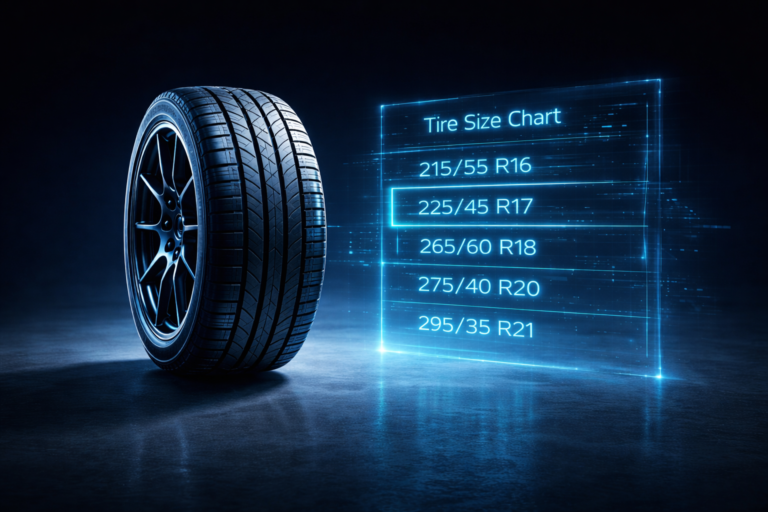
How to Read the Tire Size Chart Correctly
Using a tire size chart might seem intimidating at first glance, but once you understand the basic metric system used by manufacturers worldwide, it becomes incredibly simple. Whether you are driving a compact sedan, a heavy-duty truck, or an SUV, the numbers on your sidewall dictate your vehicle’s handling, fuel economy, and safety.
Understanding the Metric Tire Numbers
When you click on any dimension in our tire size chart above, you will see a format like 225/45R17. Here is exactly what those numbers mean:
225 (Section Width): This is the width of the tire measured in millimeters from sidewall to sidewall. A wider tire provides more grip but may reduce fuel efficiency.
45 (Aspect Ratio): This is the height of the tire’s sidewall, expressed as a percentage of the width. In this example, the sidewall height is 45% of 225mm.
R (Construction): This stands for Radial construction, which is the industry standard for almost all modern passenger vehicles.
17 (Wheel Diameter): This is the size of the wheel (rim) that the tire is designed to fit, measured in inches. This is why our chart is organized by wheel sizes from 15″ to 24″.
Why Choosing the Right Size is Crucial
Upgrading to larger wheels (like moving from a 16″ to an 18″ rim) is a popular modification. However, if you change your wheel diameter, you must use a tire size chart to find a tire with a lower profile (aspect ratio) to keep the overall diameter the same as your factory settings.
Failing to match the overall diameter can cause your speedometer to display inaccurate speeds, interfere with your anti-lock braking system (ABS), and even cause the tire to rub against the suspension components. For more information regarding international tire safety and performance standards, you can refer to the official guidelines provided by the [NHTSA] (National Highway Traffic Safety Administration).
Always consult our comprehensive database and use our [Tire Size Calculator] before making a final purchase. Clicking on any size in the tabs above will guarantee that you find the best real-time deals from trusted retailers!