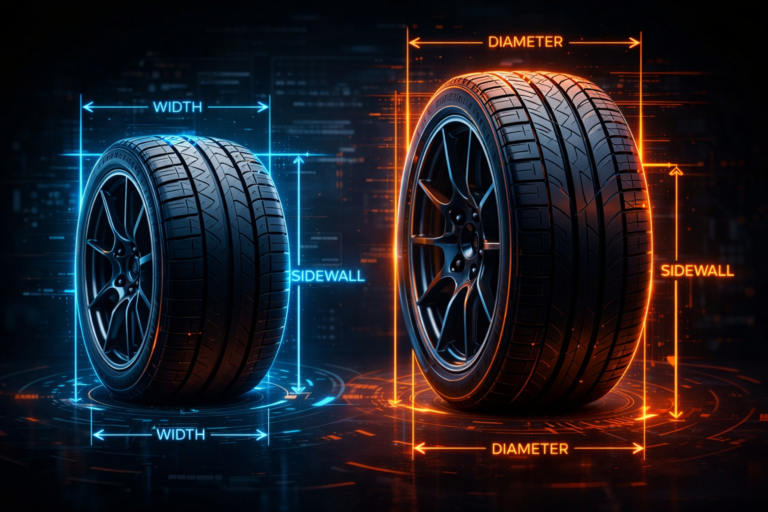
Ultimate Tire Size Comparison & Visualizer
Compare two different tire sizes instantly. Enter your current tire size and your new tire size below to calculate the difference in diameter, width, and sidewall. Find the perfect fitment and shop live prices from top brands!
Size 1 (Current)
Size 2 (New)
| Spec | Size 1 | Size 2 | Diff. |
|---|
Why a Tire Size Comparison Matters for Your Vehicle
Upgrading your wheels is one of the best ways to improve your vehicle’s stance and off-road capability. However, using a reliable tire size comparison calculator is crucial before making a purchase. When you change your tire specs, you are directly affecting your vehicle’s overall geometry.
Understanding Diameter, Width, and Sidewall
Overall Diameter: This dictates how tall the tire is. A larger diameter gives you more ground clearance but can throw off your speedometer calibration and reduce your effective gear ratio.
Section Width: Wider tires provide a larger contact patch, meaning better traction on dry roads and deep mud. However, going too wide might cause rubbing against the fender.
Sidewall Height: A taller sidewall absorbs bumps better (ideal for off-roading), while a shorter sidewall improves steering response (ideal for sports cars).
By running a side-by-side tire size comparison, you can ensure your new setup stays within the recommended 3% variance from your OEM tires. Staying within this limit protects your anti-lock braking system (ABS) and transmission.
Looking for a new set? Search our massive inventory of All-Terrain Tires and find the best deals today.
Find Alternate Tire Sizes Within the Safe 3% Range
Enter your current tire size to see other real-world sizes that stay within the recommended 3% diameter variance — safe swaps that won't throw off your speedometer or ABS.
Visual Tire Size Comparison
See the actual proportional difference between two tire sizes, drawn to scale.
Tire Size Comparison: Frequently Asked Questions
How do I read the alternate size suggestions above?
Each suggested size keeps your overall tire diameter within about 3% of what you entered, so your speedometer and ABS stay accurate. The percentage shown next to each size is how much taller or shorter it is than your original — smaller percentages mean a closer match.
Why would I want a different tire size that's basically the same diameter?
Changing width and aspect ratio while keeping diameter constant lets you adjust handling and looks without affecting gearing. A wider, lower-profile tire in the same overall height gives sportier handling; a taller sidewall in the same height gives a smoother ride.
Do I need wider rims for a wider tire?
Usually, yes, within a range. Every tire width has an approved rim width range specified by the manufacturer. Mounting a tire outside that range affects handling and can cause uneven wear or bead seating issues.
What's a "staggered" tire setup?
A staggered fitment uses a narrower tire/wheel combination in front and a wider one in the rear (or vice versa), common on rear-wheel-drive performance cars. It's intentional and different from an accidental mismatch — always confirm your vehicle supports it before comparing front/rear sizes.
Can I compare a metric size directly against a flotation size?
Yes. Both describe the same physical dimensions in different notation — metric uses width in millimeters and aspect ratio as a percentage, while flotation states overall diameter and width directly in inches. Converting either to overall diameter lets you compare them apples-to-apples.
Will a slightly bigger tire actually fit without rubbing?
Diameter math alone doesn't guarantee fitment — fender clearance, suspension travel, and steering lock angle all matter too. A comparison tool tells you the size difference; a test fit or manufacturer fitment guide confirms actual clearance on your specific vehicle.